Groom’s tie: impossible to get married without it! Finding the right one that reflects your wedding ceremony style and atmosphere is as crucial as ever. From Musani you will find everything you need to make your newlywed outfit and crown the dream of a lifetime. All while following our advice on choosing your groom’s tie, or plastron. What are we talking about? Read on to find out!
Groom’s tie, which one to choose?
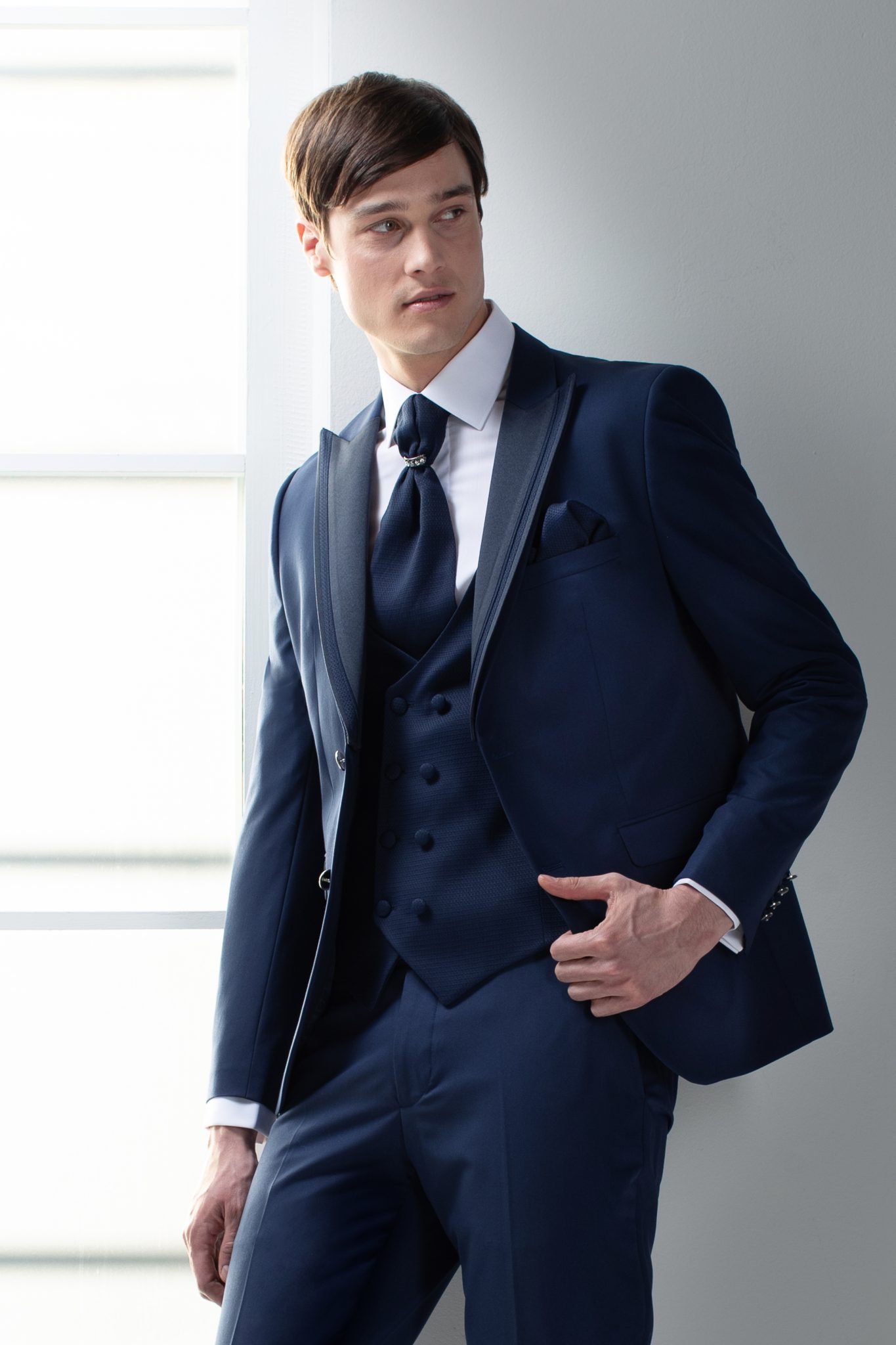
Did you know what the groom’s tie is called? There are two types: the tie and the plastron. Each of them has precise characteristics and styles that harmoniously blend with the wedding outfit. In detail, if the groom-to-be is directed to the classic tie, it should be combined with a single-breasted jacket with a maximum of three buttons. The plastron, on the other hand, resembles a tie but is of wider make and is a top choice when it comes to wedding ceremony outfits. It pairs perfectly with the vest and is fastened with a jeweled brooch, then “hides” the remaining piece of fabric under the vest itself. Fashion history tells us that the plastron was worn while hunting in order to have a piece of cloth available to heal wounds or make bandages. Now, however, it has become one of the most popular kinds of groom’s tie !
Groom’s tie becomes plastron
You will certainly have seen the plastron in films set in the late 19th century, in historical dramas set during the Victorian era: it is indeed a characteristic accessory of the dandy style of those years. Now it is an important element in the construction of the wedding dress of a groom, precisely because it puts him in the center of attention with its style and sophistication. It differs from the tie in shape and in the way it is worn: there are traditional plastrons, pre-assembled, knotting, with pleats, with ruffles, and in different colors. From plain colors to richly embroidered patterns, you are spoiled for choice.
There is no groom’s tie without his knot
Like cufflinks, handed down from generation to generation from father and son (or to the future son-in-law), the groom’s tie also plays its role of honor. Etiquette provides a veritable repertoire of knots and bows to be made, from the simplest to the most elaborate depending on all those variables that define the mood of the ceremony. With three or four maneuvers, simple knots and small knots are made, perfect for those with little manual skill when it comes to ties. Other knots for your groom’s tie are the Windsor and Atlantic, which goes with a formal, set mood. Unlike the plastron knot, which should be worn soft, the tie knot should remain tight. Caution.
How to choose the color of the tie and plastronnio
Matching the groom’s tie or his plastron chromatically requires minimal effort for maximum effect: on a monochromatic suit, play on lighter shades of the dominant color or stay in keeping with the palette. If, however, the suit has dark colors, you can dare with either a light or dark tie. Remember, however, that a harmonious effect should be created with the suit shirt! For daytime ceremonies, it is best to select light colors and light fabrics; while for after-dark weddings, make way for blue and brown tones, two great classics for suit and tie selection.