FAQ
Find the store nearest you and try on the collections to choose the dress that best suits your role and the event. In our Magazine you will find other useful suggestions.
Choosing a wedding dress isn’t just about following a particular aesthetic; it’s about understanding how you want to feel throughout the entire day. The first thing to consider is the type of wedding: a formal ceremony will call for a more structured dress, while flowing, lightweight styles work best for outdoor or more casual events.
Fit is also essential: the dress must provide good support for the bust, follow the figure without constricting it, and allow freedom of movement—from walking to sitting to dancing.
It’s important to try on different styles, even those far from your initial idea, because often the best choice is the one you don’t expect. The right dress is the one that makes you feel confident, natural, and completely at ease.
The change into a second wedding dress usually happens at two points: after the ceremony, to switch to a lighter look for the reception, or after cutting the cake, when the more lively part of the celebration begins.
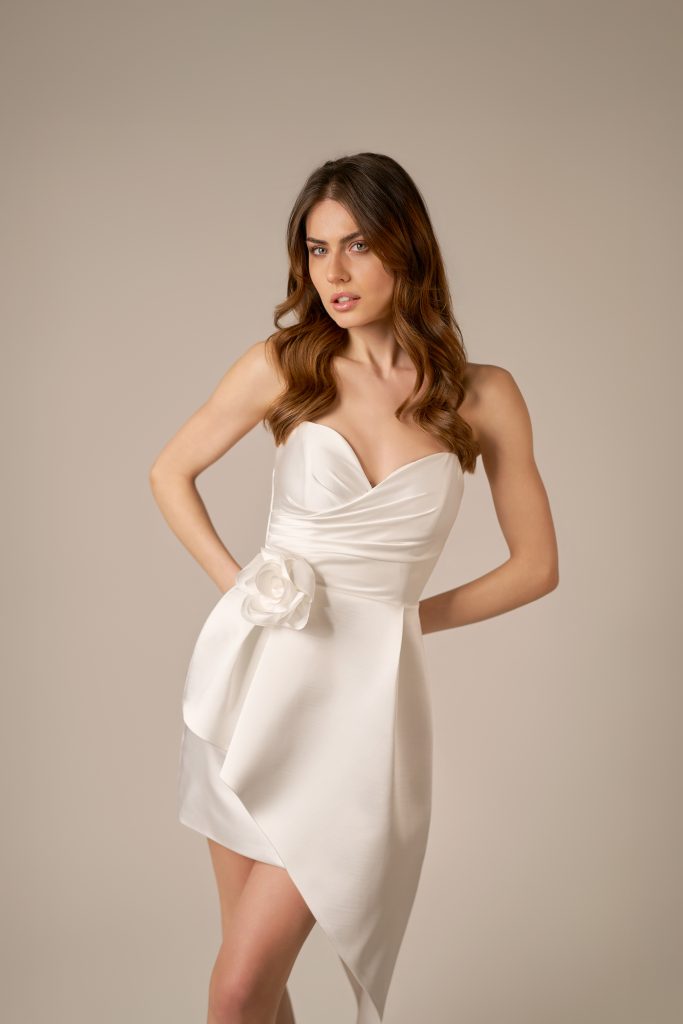
The choice depends on how the day is organized. If the ceremony dress is very structured or voluminous, a second, simpler dress—short or made of flowing fabrics—allows you to move more freely among the guests and during the dance.
More and more brides are choosing to change dresses not only for practicality, but to experience two different moments with two different styles, maintaining consistency while changing the feel.
The cost of a wedding dress can vary greatly depending on the materials, craftsmanship, and level of tailoring. Fabrics such as silk, intricate lace, or hand-embroidery affect the price, as do the dress’s internal construction and any custom alterations.
In addition to the initial cost, it’s important to consider tailoring adjustments, which are often necessary to achieve a perfect fit.
Rather than the price itself, your choice should be based on how the dress fits and how it makes you feel: a well-made dress will see you through the entire day without causing discomfort, and that’s what truly makes the difference.
Traditionally, the wedding dress was purchased by the family, but today there is no longer a set rule. Increasingly, the bride herself chooses and purchases her own dress, or the cost is shared with her partner or family.
The most important thing is to settle this matter calmly at the start of the planning process, so you can choose your dress freely and without pressure.
Regardless of who buys it, the dress remains a very personal choice, tied to how you want to experience that day and how you want to feel in your role.